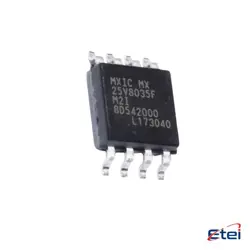
이미지는 참조용입니다.
4N25
+BOMOPTOISO 5.3KV TRANS W/BASE 6-DIP
-
제조업체온세미
-
제조업체 부품 #4N25
-
데이터시트 4N25 DataSheet
-
재고3212
365 1일 품질 보증
7*24 영업 시간 서비스 보증
90-판매 후 1일 보증
정품 보증
사양
| 속성 | 가치 |
| Part Status | Obsolete |
| Number of Channels | 1 |
| Voltage - Isolation | 5300Vrms |
| Current Transfer Ratio (Min) | 20% @ 10mA |
| Turn On / Turn Off Time (Typ) | 2µs, 2µs |
| Input Type | DC |
| Output Type | Transistor with Base |
| Voltage - Output (Max) | 30V |
| Voltage - Forward (Vf) (Typ) | 1.18V |
| Current - DC Forward (If) (Max) | 100 mA |
| Vce Saturation (Max) | 500mV |
| Operating Temperature | -55°C ~ 100°C |
| Mounting Type | Through Hole |
| Package / Case | 6-DIP (0.300", 7.62mm) |
| Supplier Device Package | 6-DIP |
| Base Product Number | 4N25 |
개요
Description
The 4N25 is commonly used in applications requiring isolation between high and low voltage parts of a system, such as in power supply circuits, microcontroller interfaces, and communication systems. It typically features a high isolation voltage rating, fast response time, and is packaged in a standard 6-pin DIP. The 4N25 is valued for its reliability, simplicity, and effectiveness in preventing circuit interference, ensuring safety and signal integrity.
Equivalent
Features
1. Phototransistor Output: The 4N25 consists of a gallium arsenide infrared LED and a silicon NPN phototransistor, allowing for signal coupling while maintaining isolation.
2. High Isolation Voltage: It typically offers a high isolation voltage between the input and output, often around 5000 Vrms, which helps protect circuits from high voltage transients.
3. Response Time: The device has moderate response times suitable for general-purpose applications, with a turn-on time and turn-off time in the microsecond range.
4. Current Transfer Ratio (CTR): The 4N25 has a CTR that indicates efficiency, usually ranging from 20% to 300%, depending on the exact model and conditions.
5. Compact Package: It is commonly available in a 6-pin DIP package, which is easy to use in various circuit designs.
6. Temperature Range: The 4N25 operates over a wide temperature range, typically from -55°C to +100°C, making it suitable for various environmental conditions.
These features make the 4N25 a versatile component in applications requiring electrical isolation, such as signal isolation, switching, and interfacing different voltage levels.
Pinout
1. Pin 1 (Anode): The anode of the internal LED. Current flows into this pin to activate the LED.
2. Pin 2 (Cathode): The cathode of the internal LED. Connect this pin to the ground or negative side of the input voltage.
3. Pin 3 (NC): Not connected. This pin is usually not used and is just for spacing purposes.
4. Pin 4 (Emitter): The emitter of the internal phototransistor. This pin is typically connected to the ground or the negative side of the circuit.
5. Pin 5 (Collector): The collector of the internal phototransistor. This pin outputs the phototransistor's signal and is connected to the load or further processing circuitry.
6. Pin 6 (Base): Base of the phototransistor. It is generally left unconnected or used to adjust the sensitivity of the phototransistor.
The primary function of the 4N25 is to transmit electrical signals while providing isolation, protecting sensitive components from high voltages or noisy environments.
Manufacturer
Motorola, while originally a leading manufacturer of semiconductors, eventually spun off its semiconductor operations into a separate company called Freescale Semiconductor, which was later acquired by NXP Semiconductors. Vishay Intertechnology is known for producing a wide range of electronic components, including discrete semiconductors and passive components. ON Semiconductor, now known as onsemi, provides intelligent technology solutions across various applications. Lite-On focuses on optoelectronic components and is known for its LED products, among other electronic components.
These companies play significant roles in supplying components essential for electronic circuits, serving industries ranging from consumer electronics to automotive and industrial applications.
Application
1. Signal Isolation: Isolating digital signals in data transmission to prevent noise and voltage spikes.
2. Switching Power Supplies: Offering feedback isolation for regulating output voltage.
3. Microcontroller Interfacing: Ensuring safety and signal integrity when connecting microcontrollers to external devices.
4. Industrial Automation: Used in control systems to separate high-voltage and low-voltage sides.
5. Communication Systems: Isolating communication lines to protect sensitive devices.
These applications leverage the optocoupler's ability to transmit signals without direct electrical connection.