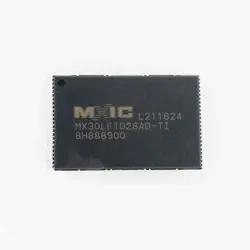
이미지는 참조용입니다.
AT89C4051-24SU
+BOMIC MCU 8BIT 4KB FLASH 20SOIC
-
제조업체에트멜
-
제조업체 부품 #AT89C4051-24SU
-
데이터시트 AT89C4051-24SU DataSheet
-
패키지 SOIC-20
-
재고3785
365 1일 품질 보증
7*24 영업 시간 서비스 보증
90-판매 후 1일 보증
정품 보증
사양
| 속성 | 가치 |
| Package / Case | Bulk |
| Series | 89C |
| Part Status | Active |
| Core Processor | 8051 |
| Core Size | 8-Bit |
| Speed | 24MHz |
| Connectivity | UART/USART |
| Peripherals | Brown-out Detect/Reset, LED, POR |
| Number of I/O | 15 |
| Program Memory Size | 4KB (4K x 8) |
| Program Memory Type | FLASH |
| RAM Size | 128 x 8 |
| Voltage - Supply (Vcc/Vdd) | 4V ~ 6V |
| Oscillator Type | Internal |
| Operating Temperature | -40°C ~ 85°C (TA) |
| Mounting Type | Surface Mount |
개요
Description
Operating at a frequency of up to 24 MHz, the AT89C4051-24SU provides sufficient processing speeds for various embedded applications. It supports a wide voltage range, typically from 4.0V to 5.5V, allowing for flexibility in power supply design.
The device includes an array of peripherals: 15 I/O lines for interfacing with external components, two 16-bit timer/counters for precise timing operations, a full-duplex UART for serial communication, and an on-chip oscillator for clock generation.
The AT89C4051 is well-suited for applications like consumer electronics, automotive systems, and industrial control, where cost-effectiveness and reliability are essential. Its compatibility with the industry-standard MCS-51 instruction set ensures ease of programming and integration into existing systems.
Equivalent
1. NXP P89V51RD2
2. Silicon Labs C8051F320
3. Infineon SAB80C517
4. STMicroelectronics STC89C52
5. Holtek HT48R50A
These alternatives offer similar microcontroller functionality and may have varying specifications. Always check datasheets for compatibility with your specific application.
Features
1. Architecture: Based on the 8-bit 8051 core, it ensures compatibility with other 8051 devices.
2. Memory: It offers 4KB of Flash memory for program storage, 128 bytes of RAM, and 64 bytes of EEPROM.
3. Clock Speed: Operates at a maximum clock frequency of 24 MHz.
4. I/O Ports: Provides 15 programmable I/O lines, suitable for interfacing with external devices.
5. Timers: Includes two 16-bit timer/counters, enhancing its capability for timing operations.
6. UART: Features a full-duplex UART for serial communication.
7. Power: Supports low-power idle and power-down modes, aiding in energy-efficient designs.
8. Package: Available in a 20-pin SOIC package, providing a space-efficient solution.
9. Operating Voltage: Typically functions within a voltage range of 4.0V to 6.0V.
10. Interrupts: Supports five vector interrupts, facilitating responsive system design.
These features make the AT89C4051-24SU suitable for compact, cost-effective, and high-performance embedded systems.
Pinout
1. VCC (Pin 20): Power supply.
2. GND (Pin 10): Ground.
3. Port 1 (Pins 1-8): An 8-bit bidirectional I/O port. If configured, it can also function as a control port for the Timer/Counter, serial communication, or external interrupts.
4. Port 3 (Pins 11-18): A second 8-bit bidirectional I/O port, which also provides special functions such as serial communication (RXD, TXD), external interrupts (INT0, INT1), and control signals for timers and counters (T0, T1).
5. RST (Pin 9): Reset input, which initializes the microcontroller when activated.
6. XTAL1 (Pin 19) and XTAL2 (Pin 20): Connections for the external oscillator or crystal to provide the clock frequency.
This microcontroller is commonly used in embedded systems where a full-featured, low-cost, and versatile 8-bit processor is needed.
Manufacturer
Application
1. Consumer Electronics: Used in small appliances and gadgets for control and interfacing.
2. Industrial Automation: Suitable for controlling machinery and processes.
3. Automotive: Employed in non-critical automotive control systems.
4. Home Automation: Powers smart home devices and systems.
5. Medical Devices: Used in simpler diagnostic and monitoring equipment.
6. Telecommunications: Assists in control and data processing tasks.
7. Toys and Gaming: Provides control in electronic toys and simple gaming devices.
Its low power consumption and flexibility make it ideal for cost-sensitive and small-scale applications.