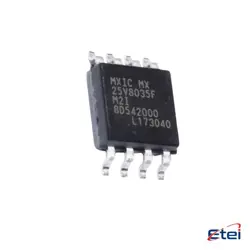
D82C54

이미지는 참조용입니다.

D82C54

+BOM

PROGRAMMABLE INTERVAL TIMER

365 1일 품질 보증

7*24 영업 시간 서비스 보증

90-판매 후 1일 보증

정품 보증

사양

속성 가치
Supplier Rochester Electronics, LLC
Package / Case Bulk
Part Status Obsolete
Type Programmable Timer
Frequency 8MHz
Voltage - Supply 4.5V ~ 5.5V
Supply Current 20 mA
Operating Temperature -55°C ~ 125°C (TC)
Supplier Device Package 24-CDIP

개요

Description

The D82C54 is a programmable interval timer, often used in microprocessor systems for timing control applications. It is a variant of the Intel 8254, produced by various manufacturers, including NEC. This device contains three independent 16-bit counters, each capable of handling clock inputs up to 10 MHz. These counters can be programmed to operate in various modes, including interrupt-on-terminal count, hardware-triggered strobe, and rate generator modes, making the D82C54 versatile for tasks like generating precise time delays, event counting, and frequency measurements.
Each counter in the D82C54 is equipped with a control word register that allows the selection of different operational modes, enabling complex timing operations. The chip interfaces with microprocessors through a parallel bus for data exchange, and its counters can be read on-the-fly without disturbing the operation, which is beneficial for real-time applications. The D82C54 is commonly used in embedded systems, instrumentation, and other applications requiring precise timing and control functionalities.

Equivalent

The D82C54 is a programmable interval timer used in microprocessor systems. Equivalent products include the Intel 8254 and the CMOS variant, the 82C54. Other compatible or similar chips include the Harris/Intersil 82C54, and NEC's uPD8254. These timers are often used in applications requiring precise timing and counting, and are compatible with a variety of microprocessor architectures. Always verify electrical and timing specifications when selecting an equivalent to ensure compatibility with your application.

Features

The D82C54 is a programmable interval timer/counter device commonly used in microprocessor systems. Here are the primary features:
1. Three Independent Counters: The device includes three independent 16-bit counters, which can be used for various timing and counting applications.
2. Binary or BCD Counting: The counters can operate in either binary or Binary-Coded Decimal (BCD) modes, providing flexibility in different types of applications.
3. Multiple Modes of Operation: It supports six programmable modes, including interrupt-on-terminal-count, hardware- or software-triggered strobe, and square wave generation, enhancing versatility in timing applications.
4. Programmable: The counters are fully programmable, allowing developers to configure them according to specific needs through software.
5. Clock Inputs: Each counter has its own clock input, which allows for independent operation of each timer.
6. Commonly Used in Systems: It is often used for generating precise time delays, event counting, and in applications requiring cyclic operations like generating square waves.
7. Compatibility: The D82C54 is compatible with a variety of microprocessor systems, making it suitable for a wide range of applications.
These features make the D82C54 an essential component in timing and control applications within embedded systems.

Pinout

The D82C54 is a programmable interval timer/counter device used primarily in microprocessor systems to perform timing and counting functions. It features a 24-pin dual in-line package (DIP). The device encompasses three independent 16-bit counters, each capable of operating in various modes, such as interrupt-on-terminal-count, rate generation, and square wave generation. The counters can be used for timing intervals, counting events, and generating precise time delays.
Key pins and their functions include:
- Data Bus (D0-D7): Used for data transfer between the CPU and the D82C54.
- Control Pins (CS, RD, WR): Enable chip selection, reading, and writing operations.
- Clock Inputs (CLK0-CLK2): Provide clock signals to the counters.
- Gate Inputs (GATE0-GATE2): Control the operation of the counters.
- Out Pins (OUT0-OUT2): Output signals from each counter.
The D82C54 is commonly used in various embedded applications for precise timing and counting operations, making it suitable for use in a wide range of microprocessor-based systems.

Manufacturer

The D82C54 is a programmable interval timer, and it was originally manufactured by Intel. Intel is a multinational corporation and technology company known primarily for its semiconductor products. Founded in 1968 and headquartered in Santa Clara, California, Intel is one of the largest and most influential companies in the tech industry. It is renowned for its microprocessors, which are used extensively in personal computers, servers, and other computing devices. In addition to CPUs, Intel's product lineup includes a range of other technologies, such as integrated graphics solutions, chipsets, and programmable logic devices. The company has played a significant role in the advancement of computing technology and continues to be a leader in innovation and research within the semiconductor industry.

Application

The D82C54 is a programmable interval timer/counter, commonly used in a variety of applications. It is often employed in embedded systems, microprocessor-based control systems, and industrial automation for precise timing and event counting. The D82C54 is also utilized in communication systems for baud rate generation, in instrumentation for time measurement, and in waveform generation for signal processing. Its ability to handle multiple timing and counting functions simultaneously makes it suitable for real-time system applications where precise timing control is essential. Additionally, it can be used in computer systems for managing hardware interrupts and scheduling tasks.

Package

The D82C54 is typically available in a dual in-line package (DIP). This package type is common for integrated circuits, allowing easy installation onto printed circuit boards with through-hole technology.