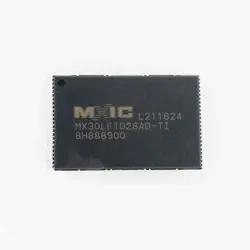
사양
| 속성 | 가치 |
| Package / Case | Tray |
| Series | MAX® 7000A |
| Part Status | Obsolete |
| Programmable Type | In System Programmable |
| Delay Timetpd(1)Max | 10 ns |
| Voltage Supply - Internal | 3V ~ 3.6V |
| Number of Logic Elements/Blocks | 16 |
| Number of Macrocells | 256 |
| Number of Gates | 5000 |
| Number of I/O | 84 |
| Operating Temperature | 0°C ~ 70°C (TA) |
| Mounting Type | Surface Mount |
개요
Description
The EPM7256AETC100-10N is a member of the MAX 7000 family of CPLDs (Complex Programmable Logic Devices), produced by Altera, which is now part of Intel. This specific model is designed for high-density logic applications, offering flexibility and performance for a variety of digital design projects.
Key features include:
1. Logic Elements: It contains 256 macrocells, which are configurable logic blocks used to implement custom logic functions.
2. Speed: The "-10N" suffix indicates a speed grade, where "10" signifies the propagation delay in nanoseconds, offering relatively fast performance for the time it was released.
3. Packaging: "ETC100" refers to the 100-pin TQFP (Thin Quad Flat Pack) package, allowing for surface-mount technology, which is suitable for compact board designs.
4. Power: Operates at a standard 5V supply voltage.
The EPM7256AETC100-10N is widely used in applications requiring moderate logic complexity, such as control systems, state machines, and interfacing tasks, providing a robust solution with reprogrammability for design flexibility.
Key features include:
1. Logic Elements: It contains 256 macrocells, which are configurable logic blocks used to implement custom logic functions.
2. Speed: The "-10N" suffix indicates a speed grade, where "10" signifies the propagation delay in nanoseconds, offering relatively fast performance for the time it was released.
3. Packaging: "ETC100" refers to the 100-pin TQFP (Thin Quad Flat Pack) package, allowing for surface-mount technology, which is suitable for compact board designs.
4. Power: Operates at a standard 5V supply voltage.
The EPM7256AETC100-10N is widely used in applications requiring moderate logic complexity, such as control systems, state machines, and interfacing tasks, providing a robust solution with reprogrammability for design flexibility.
Equivalent
The EPM7256AETC100-10N is a member of Altera's MAX 7000 series of CPLDs (Complex Programmable Logic Devices). Equivalent or alternative products might include other CPLDs from Altera's MAX series with similar specifications, or CPLDs from competing manufacturers like Xilinx's XC9500 series. When looking for equivalents, ensure that pin count, logic capacity, speed, and I/O count match your requirements. Always refer to datasheets and compatibility guides for precise matching.
Features
The EPM7256AETC100-10N is a member of Altera's MAX 7000 series, which are high-density, high-performance CMOS programmable logic devices. Key features include:
1. Density and Complexity: It provides 256 macrocells, which contribute to its high-density design, allowing complex logic designs to be implemented.
2. Performance: The "-10N" indicates a speed grade that offers a typical delay of 10 nanoseconds.
3. Architecture: It features a two-level programmable logic array (PLA) structure that supports complex logic functions and offers efficient logic utilization.
4. Package: Comes in a 100-pin TQFP package, allowing for compact installation on PCBs.
5. Speed and Power: Designed for high-speed operations, while providing low power consumption, making it suitable for a wide range of applications.
6. I/O Pins: Supports multiple input/output pins for flexible design integration.
7. Re-programmability: Non-volatile architecture ensures that the configuration is retained without the need for external storage.
These features make the EPM7256AETC100-10N ideal for various applications, including telecommunication, industrial control, and consumer electronics.
1. Density and Complexity: It provides 256 macrocells, which contribute to its high-density design, allowing complex logic designs to be implemented.
2. Performance: The "-10N" indicates a speed grade that offers a typical delay of 10 nanoseconds.
3. Architecture: It features a two-level programmable logic array (PLA) structure that supports complex logic functions and offers efficient logic utilization.
4. Package: Comes in a 100-pin TQFP package, allowing for compact installation on PCBs.
5. Speed and Power: Designed for high-speed operations, while providing low power consumption, making it suitable for a wide range of applications.
6. I/O Pins: Supports multiple input/output pins for flexible design integration.
7. Re-programmability: Non-volatile architecture ensures that the configuration is retained without the need for external storage.
These features make the EPM7256AETC100-10N ideal for various applications, including telecommunication, industrial control, and consumer electronics.
Pinout
The EPM7256AETC100-10N is a member of the MAX 7000A series of CPLDs (Complex Programmable Logic Devices) by Altera, now part of Intel. This specific model comes in a 100-pin TQFP (Thin Quad Flat Pack) package.
The device features 256 macrocells and offers a wide range of functionalities including programmable logic, combinational and sequential logic implementation, and more. It also provides the capability to implement state machines, data path functions, and complex logic circuits. The 100-pin package allows it to interface with other components in a circuit, providing necessary I/O operations.
In summary, the EPM7256AETC100-10N has a 100-pin configuration and serves versatile functions in digital logic design through its CPLD architecture.
The device features 256 macrocells and offers a wide range of functionalities including programmable logic, combinational and sequential logic implementation, and more. It also provides the capability to implement state machines, data path functions, and complex logic circuits. The 100-pin package allows it to interface with other components in a circuit, providing necessary I/O operations.
In summary, the EPM7256AETC100-10N has a 100-pin configuration and serves versatile functions in digital logic design through its CPLD architecture.
Manufacturer
The EPM7256AETC100-10N is manufactured by Altera Corporation, which is now part of Intel Corporation. Altera was known for designing and manufacturing programmable logic devices, including FPGAs (Field-Programmable Gate Arrays), CPLDs (Complex Programmable Logic Devices), and ASICs (Application-Specific Integrated Circuits). These devices are used in various applications across industries such as telecommunications, automotive, industrial, and consumer electronics.
In 2015, Altera was acquired by Intel Corporation, a leading company in the semiconductor industry known for producing microprocessors, chipsets, and other integrated circuits for computers and electronic devices. This acquisition allowed Intel to expand its product offerings and strengthen its position in the market for programmable semiconductors, particularly in data centers and the Internet of Things (IoT). Intel continues to develop and support Altera’s product lines under the Intel Programmable Solutions Group.
In 2015, Altera was acquired by Intel Corporation, a leading company in the semiconductor industry known for producing microprocessors, chipsets, and other integrated circuits for computers and electronic devices. This acquisition allowed Intel to expand its product offerings and strengthen its position in the market for programmable semiconductors, particularly in data centers and the Internet of Things (IoT). Intel continues to develop and support Altera’s product lines under the Intel Programmable Solutions Group.
Application
The EPM7256AETC100-10N is a member of the Altera MAX 7000 series of CPLDs (Complex Programmable Logic Devices). It is typically used in applications requiring moderate to complex logic designs, including:
1. Control Systems: Implementing finite state machines and custom control logic.
2. Data Processing: Handling data manipulation and complex combinatorial logic.
3. Communication Interfaces: Managing protocol handling and interfacing tasks.
4. Signal Processing: Performing real-time signal manipulation.
5. Glue Logic: Bridging between different chips or systems with custom logic.
6. Prototyping and Testing: Serving as a flexible platform for design verification.
Its reprogrammable nature and moderate capacity make it versatile for various digital design applications.
1. Control Systems: Implementing finite state machines and custom control logic.
2. Data Processing: Handling data manipulation and complex combinatorial logic.
3. Communication Interfaces: Managing protocol handling and interfacing tasks.
4. Signal Processing: Performing real-time signal manipulation.
5. Glue Logic: Bridging between different chips or systems with custom logic.
6. Prototyping and Testing: Serving as a flexible platform for design verification.
Its reprogrammable nature and moderate capacity make it versatile for various digital design applications.
Package
The EPM7256AETC100-10N is a CPLD (Complex Programmable Logic Device) from Altera, now part of Intel. It comes in a 100-pin TQFP (Thin Quad Flat Pack) package, which is a surface-mount integrated circuit package known for its compact design, suitable for applications requiring moderate pin density and reliable electrical performance.