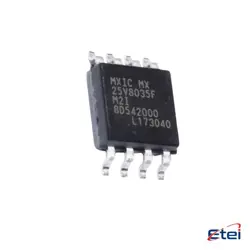
사양
| 속성 | 가치 |
| Package / Case | Tray |
| Series | MAX® 7000A |
| Part Status | Obsolete |
| Programmable Type | In System Programmable |
| Delay Timetpd(1)Max | 10 ns |
| Voltage Supply - Internal | 3V ~ 3.6V |
| Number of Logic Elements/Blocks | 16 |
| Number of Macrocells | 256 |
| Number of Gates | 5000 |
| Number of I/O | 120 |
| Operating Temperature | 0°C ~ 70°C (TA) |
| Mounting Type | Surface Mount |
개요
Description
The EPM7256AETC144-10N is a member of the Altera MAX 7000 series, which is a family of high-density programmable logic devices (PLDs). Specifically, this model is a Complex Programmable Logic Device (CPLD) that is often used in digital circuit designs. It features 256 macrocells and is housed in a 144-pin TQFP (Thin Quad Flat Pack) package. The "-10N" in the model number refers to its speed grade, indicating a 10-nanosecond propagation delay.
The EPM7256AETC144-10N is designed for use in a range of applications that require programmable logic solutions, such as data path management, control logic, and state machine implementation. It offers non-volatile memory, allowing designs to be retained without power, and supports in-system programmability, enabling updates and reconfigurations post-deployment. Altera, now part of Intel, provides development tools and resources to facilitate the design and deployment processes for engineers using the MAX 7000 series.
The EPM7256AETC144-10N is designed for use in a range of applications that require programmable logic solutions, such as data path management, control logic, and state machine implementation. It offers non-volatile memory, allowing designs to be retained without power, and supports in-system programmability, enabling updates and reconfigurations post-deployment. Altera, now part of Intel, provides development tools and resources to facilitate the design and deployment processes for engineers using the MAX 7000 series.
Equivalent
The EPM7256AETC144-10N is a member of Altera's MAX 7000 series of CPLDs (Complex Programmable Logic Devices). Equivalent products would be those offering similar logic capacity, speed, and functionality. Consider the following alternatives:
1. Lattice's ispMACH 4000 series.
2. Xilinx's XC9500XL series.
3. Microchip's ATF1500 series.
Ensure compatibility in terms of I/O count, package type, and voltage requirements when selecting an equivalent.
1. Lattice's ispMACH 4000 series.
2. Xilinx's XC9500XL series.
3. Microchip's ATF1500 series.
Ensure compatibility in terms of I/O count, package type, and voltage requirements when selecting an equivalent.
Features
The EPM7256AETC144-10N is a member of the Altera MAX 7000 series of CPLDs (Complex Programmable Logic Devices). It features 256 macrocells and offers a maximum of 5,000 usable gates. The chip is housed in a 144-pin TQFP (Thin Quad Flat Pack) package. Key characteristics of this device include a propagation delay of 10 ns, making it suitable for high-speed applications.
It supports in-system programmability with a reprogrammable architecture, allowing for design flexibility and updates. The EPM7256AETC144-10N operates with a voltage range of 3.3V, enabling power-efficient operation. Additionally, the device provides ample I/O pins for broader connectivity and design options. With embedded support for various logic functions, it can be used in a wide array of digital applications, including control and communication systems.
The device also features security measures to protect against unauthorized access and copying of programmed data. Its robust design ensures reliability in various operating conditions, making it a versatile choice for engineers and designers.
It supports in-system programmability with a reprogrammable architecture, allowing for design flexibility and updates. The EPM7256AETC144-10N operates with a voltage range of 3.3V, enabling power-efficient operation. Additionally, the device provides ample I/O pins for broader connectivity and design options. With embedded support for various logic functions, it can be used in a wide array of digital applications, including control and communication systems.
The device also features security measures to protect against unauthorized access and copying of programmed data. Its robust design ensures reliability in various operating conditions, making it a versatile choice for engineers and designers.
Pinout
The EPM7256AETC144-10N is a CPLD (Complex Programmable Logic Device) from Altera's MAX 7000 series. It comes in a 144-pin Thin Quad Flat Pack (TQFP) package. The device features 256 macrocells, which are the basic building blocks used for implementing logic functions. Each macrocell can be configured to perform various logic functions, making it suitable for a wide range of applications.
The pin count for the EPM7256AETC144-10N is 144 pins. These pins are used for various functions, including input/output, power supply, ground, and dedicated configuration pins. The device provides flexible I/O options, allowing it to interface with other digital components in a system.
The specific functions of the pins can vary depending on how the CPLD is programmed, as it is designed to be highly configurable. Key features include in-system programmability, fast input-to-output performance, and low power consumption, making it suitable for use in designs requiring moderate complexity and speed.
The pin count for the EPM7256AETC144-10N is 144 pins. These pins are used for various functions, including input/output, power supply, ground, and dedicated configuration pins. The device provides flexible I/O options, allowing it to interface with other digital components in a system.
The specific functions of the pins can vary depending on how the CPLD is programmed, as it is designed to be highly configurable. Key features include in-system programmability, fast input-to-output performance, and low power consumption, making it suitable for use in designs requiring moderate complexity and speed.
Manufacturer
The EPM7256AETC144-10N is manufactured by Altera Corporation. Altera was a major designer and manufacturer of programmable logic devices (PLDs), including field-programmable gate arrays (FPGAs) and complex programmable logic devices (CPLDs). The company specialized in developing products that allowed customers to customize electronic circuits for various applications, such as telecommunications, automotive, industrial, and consumer electronics.
Altera's products were widely used in industries requiring flexible and efficient digital logic solutions. In 2015, Altera was acquired by Intel Corporation, a leading company in the semiconductor industry known for its computer processors and related technologies. Following the acquisition, Altera's products and technologies were integrated into Intel’s Programmable Solutions Group. This acquisition enhanced Intel's product portfolio by including Altera's FPGA solutions, which support a broad range of applications that benefit from high-performance and highly customizable computing solutions.
Altera's products were widely used in industries requiring flexible and efficient digital logic solutions. In 2015, Altera was acquired by Intel Corporation, a leading company in the semiconductor industry known for its computer processors and related technologies. Following the acquisition, Altera's products and technologies were integrated into Intel’s Programmable Solutions Group. This acquisition enhanced Intel's product portfolio by including Altera's FPGA solutions, which support a broad range of applications that benefit from high-performance and highly customizable computing solutions.
Application
The EPM7256AETC144-10N is a CPLD (Complex Programmable Logic Device) from Altera's MAX 7000 family. Its application areas include:
1. Digital Signal Processing (DSP): Used for high-speed data processing tasks.
2. Communications: Applicable in signal encoding, decoding, and protocol processing.
3. Industrial Automation: Facilitates control systems and automation tasks.
4. Consumer Electronics: Utilized for custom logic functions in various devices.
5. Data Acquisition Systems: Supports data collection and processing tasks.
6. Networking: Assists in implementing network protocols and interfaces.
7. Automotive Systems: Used in control units for various automotive applications.
These fields benefit from the CPLD's reconfigurability, cost-effectiveness, and reliability.
1. Digital Signal Processing (DSP): Used for high-speed data processing tasks.
2. Communications: Applicable in signal encoding, decoding, and protocol processing.
3. Industrial Automation: Facilitates control systems and automation tasks.
4. Consumer Electronics: Utilized for custom logic functions in various devices.
5. Data Acquisition Systems: Supports data collection and processing tasks.
6. Networking: Assists in implementing network protocols and interfaces.
7. Automotive Systems: Used in control units for various automotive applications.
These fields benefit from the CPLD's reconfigurability, cost-effectiveness, and reliability.
Package
The EPM7256AETC144-10N is a CPLD (Complex Programmable Logic Device) housed in a 144-pin TQFP (Thin Quad Flat Pack) package.