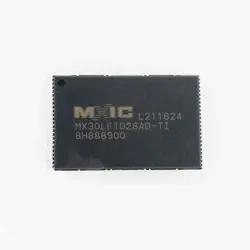
Description
GMB63H1PC1.6 appears to be a course code or identifier, typically used in academic settings to denote a specific class. Without specific information about the institution or the course catalog, it's difficult to provide detailed information. However, I can provide a general framework for understanding such codes:
- GMB: Likely indicates the department or program offering the course. It might stand for something like "General Management Business" or a similar program.
- 63: Could denote the level of the course. Lower numbers often indicate introductory levels, while higher numbers may suggest more advanced or specialized content.
- H1: May refer to the term, semester, or part of the academic year in which the course is offered.
- PC1.6: Might specify a particular section, module, or topic within the course, or it could be an internal tracking number for administrative purposes.
For precise details, check the course catalog or contact the academic department directly.
Equivalent
The GMB63H1PC1.6 chip is a specific product number, often tied to unique specifications by a manufacturer. To find equivalent products, you should check the specifications of the chip such as its processing power, connectivity options, size, and power requirements. Then, compare these with offerings from other manufacturers like Qualcomm, Nvidia, or MediaTek. Without specific details, it's challenging to pinpoint exact equivalents, but chips serving similar functions in devices or IoT applications might be comparable.
Features
The GMB63H1PC1.6 is a model number that appears to reference a graphics card, likely from a specific series or manufacturer. While detailed specifications for this precise model might not be widely documented, features typical of a 1.6 series graphics card could include:
1. GPU Architecture: Designed for efficient performance in handling graphics-intensive tasks.
2. Memory: Likely equipped with a specific amount of high-speed GDDR memory for smoother gameplay and rendering.
3. Ports: Typically includes multiple output ports such as HDMI, DisplayPort, or DVI for connecting to various display types.
4. Cooling System: May have an advanced cooling solution involving fans or a heatsink to maintain optimal temperatures during use.
5. Power Consumption: Generally optimized for a balance between performance and energy efficiency.
6. DirectX and OpenGL Support: Supports the latest versions to enable compatibility with a wide range of games and applications.
7. VR Ready (if applicable): Designed to support virtual reality experiences if part of its feature set.
For specific details, it is recommended to consult the manufacturer's official documentation or product page.
Manufacturer
The GMB63H1PC1.6 is manufactured by Siemens. Siemens is a multinational conglomerate company based in Germany, primarily known for its operations in the fields of industry, energy, healthcare, and infrastructure. The company is one of the largest industrial manufacturing companies in Europe, and its diverse portfolio includes products and services related to automation, digitalization, and electrification. Siemens is highly regarded for its technological innovations and engineering solutions, serving a wide array of sectors worldwide.
Application
The GMB63H1PC1.6 is a type of pressure sensor or transducer used in various applications. Its primary application areas include industrial automation, where it helps in monitoring and controlling pressure in systems like HVAC, pneumatic, and hydraulic systems. It can also be used in process industries to ensure accurate pressure measurement and regulation in operations involving gases and liquids. Additionally, it finds applications in energy and utilities sectors for monitoring pressure in pipelines and storage tanks. The sensor's robust design makes it suitable for harsh environments, ensuring reliable performance in demanding conditions.
Package
The GMB63H1PC1.6 is typically associated with an electronic component, such as a semiconductor or transistor. To accurately determine the package type, one would need to consult the manufacturer's datasheet or part specifications, as this information is not universally standardized. If this refers to a specific product, please check the manufacturer’s details for precise packaging information.