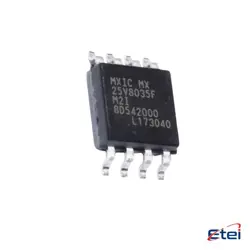
이미지는 참조용입니다.
HMC452QS16GETR
+BOMIC AMP CDMA 400MHZ-2.2GHZ 16QSOP
-
제조업체아날로그 디바이스(주)
-
제조업체 부품 #HMC452QS16GETR
-
데이터시트 HMC452QS16GETR DataSheet
-
재고8152
365 1일 품질 보증
7*24 영업 시간 서비스 보증
90-판매 후 1일 보증
정품 보증
사양
| 속성 | 가치 |
| Supplier | Analog Devices Inc. |
| Package | Tape & Reel (TR) |
| ProductStatus | Active |
| Frequency | 400MHz ~ 2.2GHz |
| P1dB | 31dBm |
| Gain | 22.5dB |
| NoiseFigure | 7.5dB |
| RFType | CDMA, GSM, WCDMA |
| Voltage-Supply | 5V |
| Current-Supply | 485mA |
| TestFrequency | 2.17GHz |
| MountingType | Surface Mount |
| Package/Case | 16-SSOP (0.154, 3.90mm Width) Exposed Pad |
개요
Description
Key features of the HMC452QS16GETR include a gain of around 14 dB and an output third-order intercept point (OIP3) of about 36 dBm, which ensures good linearity and efficiency. The amplifier typically requires a single positive supply voltage and is designed for ease of integration into RF circuits, providing consistent performance across its operating frequency range.
Overall, the HMC452QS16GETR is a reliable and versatile component for engineers designing RF systems that require moderate power amplification with excellent linearity.
Equivalent
1. Analog Devices' HMC313LP3ETR
2. Qorvo's RFPA3800
3. Mini-Circuits' PHA-1+
When selecting a replacement, ensure the specifications such as frequency range, gain, power output, and package type match your requirements. It's important to consult datasheets for detailed comparisons.
Features
Pinout
The 16-pin QSOP package configuration typically includes pins for RF input and output, biasing, and grounding, although the specific pin functions might vary based on the application requirements and circuit design. For precise pin assignments and detailed functional description, it is essential to refer to the datasheet provided by the manufacturer. This document will offer comprehensive information on pin configuration, electrical characteristics, typical performance curves, and recommended operating conditions.
Manufacturer
Application
1. Cellular Infrastructure: Enhancing signal amplification in base stations.
2. Wireless Communications: Supporting signal transmission in Wi-Fi, LTE, and other wireless technologies.
3. Satellite Communications: Providing reliable amplification for uplink and downlink signals.
4. Point-to-Point Radios: Facilitating high-frequency signal transmission over long distances.
5. Military and Aerospace: Used in radar systems and secure communication links due to its robust performance.
6. Test and Measurement Equipment: Providing accurate amplification for signal characterization and analysis.
Its broadband performance and high power output make it suitable for these demanding applications.