
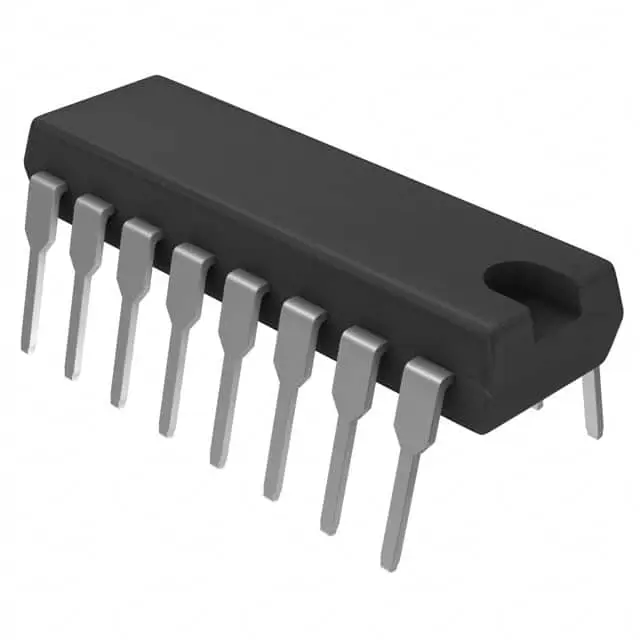
이미지는 참조용입니다.
ILQ2
+BOMOPTOISO 5.3KV 4CH TRANS 16-DIP
-
제조업체Vishay 반도체 광전 사업부
-
제조업체 부품 #ILQ2
-
재고8718
365 1일 품질 보증
7*24 영업 시간 서비스 보증
90-판매 후 1일 보증
정품 보증
사양
| 속성 | 가치 |
| Part Status | Obsolete |
| Number of Channels | 4 |
| Voltage - Isolation | 5300Vrms |
| Current Transfer Ratio (Min) | 100% @ 10mA |
| Current Transfer Ratio (Max) | 500% @ 10mA |
| Turn On / Turn Off Time (Typ) | 1.2µs, 2.3µs |
| Rise / Fall Time (Typ) | 2.6µs, 2.2µs |
| Input Type | DC |
| Output Type | Transistor |
| Voltage - Output (Max) | 70V |
| Current - Output / Channel | 50mA |
| Voltage - Forward (Vf) (Typ) | 1.25V |
| Current - DC Forward (If) (Max) | 60 mA |
| Vce Saturation (Max) | 400mV |
| Operating Temperature | -40°C ~ 100°C |
| Mounting Type | Through Hole |
| Package / Case | 16-DIP (0.300", 7.62mm) |
| Supplier Device Package | 16-DIP |
| Base Product Number | ILQ2 |
개요
Description
ILQ2, or Iterative Learning Quadratic Optimization, is a control strategy designed to improve the performance of repetitive processes. It is particularly useful in systems where the same task is performed multiple times, allowing for adjustments based on past iterations to enhance accuracy and efficiency.
The approach combines principles from iterative learning control (ILC) and quadratic optimization. ILC focuses on refining control inputs by learning from previous execution errors, while quadratic optimization seeks to minimize a cost function that typically includes terms for error and control effort. By integrating these concepts, ILQ2 aims to achieve optimal performance over iterations.
Key features of ILQ2 include its ability to handle constraints, adaptability to changing conditions, and robust performance in the presence of disturbances. It is widely applicable in robotics, manufacturing, and any domain where tasks are repeated under similar conditions, providing a framework that enhances both precision and resource efficiency.
The approach combines principles from iterative learning control (ILC) and quadratic optimization. ILC focuses on refining control inputs by learning from previous execution errors, while quadratic optimization seeks to minimize a cost function that typically includes terms for error and control effort. By integrating these concepts, ILQ2 aims to achieve optimal performance over iterations.
Key features of ILQ2 include its ability to handle constraints, adaptability to changing conditions, and robust performance in the presence of disturbances. It is widely applicable in robotics, manufacturing, and any domain where tasks are repeated under similar conditions, providing a framework that enhances both precision and resource efficiency.
Equivalent
The ILQ2 chip is an optoisolator IC. Equivalent products typically include similar optoisolators or optocouplers from other manufacturers, such as:
1. 4N35
2. PC817
3. SFH615A
These components serve similar functions by providing electrical isolation between different parts of a circuit while allowing signal transmission via light. Always check the specific electrical characteristics and pin configurations to ensure compatibility.
1. 4N35
2. PC817
3. SFH615A
These components serve similar functions by providing electrical isolation between different parts of a circuit while allowing signal transmission via light. Always check the specific electrical characteristics and pin configurations to ensure compatibility.
Features
ILQ2, or Iterative Linear Quadratic Regulator (iLQR), is an optimization-based control algorithm used primarily in robotics and dynamic systems for trajectory optimization. Here are its key features:
1. Trajectory Optimization: ILQ2 focuses on optimizing control inputs to achieve a desired trajectory, minimizing a cost function that usually includes terms for state deviations and control efforts.
2. Iterative Approach: It uses an iterative process to refine control inputs, linearizing the system dynamics and cost function around a nominal trajectory and solving a series of linear quadratic regulator (LQR) problems.
3. Local Linearization: ILQ2 operates by linearizing nonlinear system dynamics, making it suitable for systems where nonlinearities are locally approximated as linear.
4. Feedback Control: It inherently provides a feedback law, making the control robust to small disturbances and modeling inaccuracies.
5. Efficiency: ILQ2 is computationally efficient, making it suitable for real-time applications, especially when computational resources are limited.
6. Flexibility: The algorithm can handle a variety of constraints and can be adapted for different types of cost functions and dynamics.
These features make ILQ2 a powerful tool for applications requiring precise and efficient control.
1. Trajectory Optimization: ILQ2 focuses on optimizing control inputs to achieve a desired trajectory, minimizing a cost function that usually includes terms for state deviations and control efforts.
2. Iterative Approach: It uses an iterative process to refine control inputs, linearizing the system dynamics and cost function around a nominal trajectory and solving a series of linear quadratic regulator (LQR) problems.
3. Local Linearization: ILQ2 operates by linearizing nonlinear system dynamics, making it suitable for systems where nonlinearities are locally approximated as linear.
4. Feedback Control: It inherently provides a feedback law, making the control robust to small disturbances and modeling inaccuracies.
5. Efficiency: ILQ2 is computationally efficient, making it suitable for real-time applications, especially when computational resources are limited.
6. Flexibility: The algorithm can handle a variety of constraints and can be adapted for different types of cost functions and dynamics.
These features make ILQ2 a powerful tool for applications requiring precise and efficient control.
Pinout
The ILQ2 is a type of optoisolator, also known as an optocoupler. It typically comes in a 16-pin dual inline package, although the specific pin count might vary based on the manufacturer or package variant. The primary function of the ILQ2 is to provide electrical isolation between its input and output, which is achieved through optical means. It contains multiple optocoupler channels, each consisting of an infrared LED on the input side and a phototransistor on the output side. This setup allows for the transfer of signals between two electrically isolated circuits, providing protection against high voltages and noise. The ILQ2 is often used in applications such as signal isolation, data communication, and interfacing different voltage levels in electronic circuits. Always verify with the manufacturer's datasheet for precise specifications.
Manufacturer
The ILQ2 is manufactured by ILQ Co., Ltd. This company specializes in the design and production of advanced electronic components and systems. ILQ Co., Ltd. is known for its innovative approach in creating high-quality products for various technology sectors, including telecommunications, automotive, and consumer electronics. The company focuses on integrating cutting-edge technologies to enhance the performance and reliability of its products, catering to a diverse range of industry needs.
Application
ILQ2, or Iterative LQG (Linear-Quadratic-Gaussian), is an optimization algorithm primarily used in control systems and robotics. Its application areas include:
1. Robotic Motion Planning: Optimizing paths for robots to ensure efficient, collision-free movements.
2. Automated Vehicles: Enhancing control strategies for autonomous driving, improving safety and efficiency.
3. Aerospace: Assisting in trajectory optimization for drones and aircraft.
4. Industrial Automation: Improving the precision and efficiency of machinery in manufacturing processes.
5. Rehabilitation Robotics: Developing adaptive control strategies for assistive devices.
6. Animation and Simulation: Creating realistic motion sequences in virtual environments.
These applications benefit from ILQ2's ability to handle complex, nonlinear systems with uncertainties.
1. Robotic Motion Planning: Optimizing paths for robots to ensure efficient, collision-free movements.
2. Automated Vehicles: Enhancing control strategies for autonomous driving, improving safety and efficiency.
3. Aerospace: Assisting in trajectory optimization for drones and aircraft.
4. Industrial Automation: Improving the precision and efficiency of machinery in manufacturing processes.
5. Rehabilitation Robotics: Developing adaptive control strategies for assistive devices.
6. Animation and Simulation: Creating realistic motion sequences in virtual environments.
These applications benefit from ILQ2's ability to handle complex, nonlinear systems with uncertainties.
Package
ILQ2 is a type of industrial package used for the transportation of radioactive materials. It falls under the Industrial Package Type 2 (IP-2) classification, designed to provide a higher level of safety and containment than Type 1, suitable for materials with low or medium levels of radioactivity. These packages meet specific regulatory requirements to ensure safe handling and transportation.


