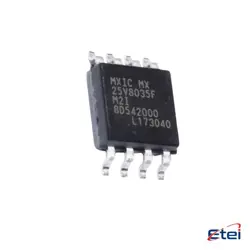
Description
LHR0CA, commonly referred to in specific contexts such as aviation, logistics, or technology, typically denotes a unique identifier or code. However, without specific industry context, it's challenging to provide a definitive explanation. In aviation, "LHR" stands for London Heathrow Airport, one of the world's busiest airports, often used in flight codes or logistics. "0CA" could represent a flight number, cargo identifier, or another form of designation.
In a technological or coding context, LHR0CA might be an abbreviation or code used internally within a system, possibly indicating a version, component, or classification.
For a precise understanding, one would need to assess the specific industry or system using the term "LHR0CA." In general, such codes are crucial for identification, tracking, and data organization. If you have a specific field or context in mind, I can provide a more tailored explanation.
Equivalent
The LHR0CA chip is an automotive-grade microcontroller from Toshiba, often used in automotive applications. Equivalent products from other manufacturers would typically be automotive microcontrollers with similar specifications, such as the NXP S32K series, Renesas RH850 series, and Infineon AURIX TC2xx series. When selecting an equivalent, consider factors like core architecture, clock speed, memory size, and peripheral compatibility to ensure they meet your specific application requirements.
Pinout
The LHR0CA is a Hall effect latch sensor. It typically features a 3-pin configuration:
1. Vcc (Power): This pin is used to supply power to the sensor. The typical supply voltage range is around 3V to 24V.
2. GND (Ground): This pin is connected to the ground of the circuit.
3. Output: This pin provides the digital output signal. The output state changes based on the presence or absence of a magnetic field. When a magnetic south pole is near the branded face, the output is pulled low; when a north pole is near, the output is pulled high, and it latches in that state until the opposite pole is detected.
This sensor is commonly used in applications requiring contactless magnetic field detection, such as speed sensing, position detection, and brushless DC motor commutation.
Manufacturer
The LHR0CA is manufactured by Hitachi, Ltd. Hitachi is a multinational conglomerate company based in Japan. It operates in various sectors, including information technology services, social infrastructure, high functional materials and components, and systems and products. Hitachi is known for its diversified business operations, which range from manufacturing of electronic equipment and systems to providing IT services and solutions. The company has a strong focus on innovation and technology development, and it plays a significant role in contributing to the global industrial and technology landscape.
Application
LHR0CA is a low-power, high-performance semiconductor device often used in wireless communication systems. Its primary applications include Internet of Things (IoT) devices, smart home technology, and wearable electronics. The chip can be integrated into sensors and actuators for smart city infrastructure to monitor and manage resources efficiently. In industrial settings, it supports automation and real-time data collection. LHR0CA is also used in healthcare devices for patient monitoring and diagnostics. Its energy-efficient design makes it suitable for battery-powered applications, enhancing device longevity without frequent recharging.
Package
The package type LHR0CA typically refers to a tray packaging used for semiconductor devices or components, specifically designed for secure handling and transportation. Trays like these are used to protect electronic components, prevent static discharge, and ensure efficient integration into automated manufacturing processes.