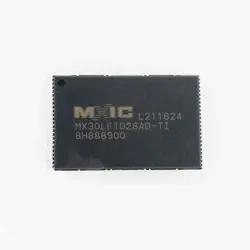
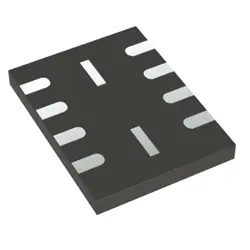
이미지는 참조용입니다.
LMZ14203HTZ
+BOMSwitching Voltage Regulators
-
제조업체텍사스 인스트루먼트(주)
-
제조업체 부품 #LMZ14203HTZ
-
재고6481
365 1일 품질 보증
7*24 영업 시간 서비스 보증
90-판매 후 1일 보증
정품 보증
사양
| 속성 | 가치 |
개요
Description
The LMZ14203HTZ is a DC-DC power module designed by Texas Instruments. It integrates a switching regulator, inductor, and other necessary components into a single package to simplify the design of power supply solutions. This module is capable of delivering up to 3A of output current with high efficiency, making it suitable for various applications such as telecommunications, industrial, and consumer electronics.
Key features of the LMZ14203HTZ include a wide input voltage range of 6V to 42V, adjustable output voltage from 0.8V to 6V, and excellent thermal performance due to its integrated thermal management. The device offers protection features such as overcurrent, thermal shutdown, and undervoltage lockout to ensure reliable operation. It also supports both fixed-frequency operation for predictable EMI performance and an integrated soft-start to limit inrush current.
The compact form factor of the LMZ14203HTZ allows for easy integration into space-constrained designs, making it a versatile solution for powering microcontrollers, FPGAs, and other digital circuits.
Key features of the LMZ14203HTZ include a wide input voltage range of 6V to 42V, adjustable output voltage from 0.8V to 6V, and excellent thermal performance due to its integrated thermal management. The device offers protection features such as overcurrent, thermal shutdown, and undervoltage lockout to ensure reliable operation. It also supports both fixed-frequency operation for predictable EMI performance and an integrated soft-start to limit inrush current.
The compact form factor of the LMZ14203HTZ allows for easy integration into space-constrained designs, making it a versatile solution for powering microcontrollers, FPGAs, and other digital circuits.
Equivalent
The LMZ14203HTZ is a simple switcher power module by Texas Instruments. Equivalent products can include:
1. Murata MYR series: Similar integrated power module solutions.
2. RECOM RPM series: Compact power modules with similar specs.
3. Traco Power's TSR series: Provides efficient, compact DC/DC converters.
4. Vicor's DCM series: Offers isolated, regulated power solutions.
When selecting equivalents, ensure to match key parameters like input/output voltage, current, efficiency, and package size to meet application requirements.
1. Murata MYR series: Similar integrated power module solutions.
2. RECOM RPM series: Compact power modules with similar specs.
3. Traco Power's TSR series: Provides efficient, compact DC/DC converters.
4. Vicor's DCM series: Offers isolated, regulated power solutions.
When selecting equivalents, ensure to match key parameters like input/output voltage, current, efficiency, and package size to meet application requirements.
Features
The LMZ14203HTZ is a simple switcher power module from Texas Instruments. It features a 6V to 42V input voltage range and delivers an adjustable output voltage from 0.8V to 6V with an output current of up to 3A. The module integrates a DC-DC converter with an inductor and requires minimal external components, simplifying design and reducing space. It provides high efficiency and thermal performance with an operational ambient temperature range of -40°C to 125°C. The LMZ14203HTZ also includes overcurrent and thermal shutdown protection for enhanced reliability. Its small footprint and high power density make it suitable for industrial and other space-constrained applications.
Pinout
The LMZ14203HTZ is a simple switcher power module from Texas Instruments. It is packaged in a 7-pin TO-PMOD package. The pin functions are as follows:
1. VIN: Input voltage supply pin where the input power is fed into the module.
2. GND: Ground pin; there are multiple ground pins that need to be connected to the ground plane.
3. VOUT: Output voltage pin that provides the regulated output.
4. FB: Feedback pin used to set the output voltage.
5. SS/TR: Soft-start and tracking pin that allows for a controlled rise of the output voltage.
6. ON/OFF: Enable pin to turn the module on or off; active high.
7. NC: No connect pin that typically has no internal connection.
The LMZ14203HTZ provides efficient power conversion with minimal external components, ideal for space-constrained applications.
1. VIN: Input voltage supply pin where the input power is fed into the module.
2. GND: Ground pin; there are multiple ground pins that need to be connected to the ground plane.
3. VOUT: Output voltage pin that provides the regulated output.
4. FB: Feedback pin used to set the output voltage.
5. SS/TR: Soft-start and tracking pin that allows for a controlled rise of the output voltage.
6. ON/OFF: Enable pin to turn the module on or off; active high.
7. NC: No connect pin that typically has no internal connection.
The LMZ14203HTZ provides efficient power conversion with minimal external components, ideal for space-constrained applications.
Manufacturer
The LMZ14203HTZ is manufactured by Texas Instruments. Texas Instruments (TI) is a global semiconductor company based in Dallas, Texas, known for designing and manufacturing a wide range of electronic components used in various applications. TI is renowned for its analog and embedded processing products, which are utilized in industries such as automotive, industrial, consumer electronics, and communications. The company's portfolio includes products like microcontrollers, processors, sensors, and power management chips, such as the LMZ14203HTZ, which is a power module used for voltage regulation. Texas Instruments is a leading player in the semiconductor industry and is recognized for its innovation and extensive product offerings that cater to a diverse set of technological needs.
Application
The LMZ14203HTZ is a simple switcher power module designed for various applications. It is commonly used in:
1. Industrial and commercial low-power systems.
2. Distributed power architectures.
3. Point-of-load regulation for FPGAs, DSPs, and ASICs.
4. Power management in telecommunications and networking equipment.
5. Test and measurement devices.
6. Embedded computing systems.
Its integrated design and reliability make it ideal for applications requiring efficient power conversion and compactness.
1. Industrial and commercial low-power systems.
2. Distributed power architectures.
3. Point-of-load regulation for FPGAs, DSPs, and ASICs.
4. Power management in telecommunications and networking equipment.
5. Test and measurement devices.
6. Embedded computing systems.
Its integrated design and reliability make it ideal for applications requiring efficient power conversion and compactness.
Package
The LMZ14203HTZ is a DC-DC power module from Texas Instruments, and it comes in a TO-PMOD package. This package type is designed to facilitate easy mounting and efficient thermal management for power modules.