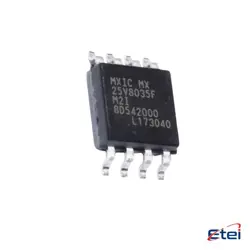
이미지는 참조용입니다.
MC33662BLEFR2
+BOMIC TRANSCEIVER 1/1 8SOIC
-
제조업체은지포미국주식회사
-
제조업체 부품 #MC33662BLEFR2
-
재고2543
365 1일 품질 보증
7*24 영업 시간 서비스 보증
90-판매 후 1일 보증
정품 보증
사양
| 속성 | 가치 |
| Supplier | NXP USA Inc. |
| Package | Tape & Reel (TR),Cut Tape (CT) |
| ProductStatus | Active |
| Type | Transceiver |
| Protocol | LINbus |
| NumberofDrivers/Receivers | 1/1 |
| DataRate | 20kbps |
| Voltage-Supply | 7V ~ 18V |
| OperatingTemperature | -40°C ~ 125°C |
| MountingType | Surface Mount |
| Package/Case | 8-SOIC (0.154, 3.90mm Width) |
개요
Description
MC33662BLEFR2 is an automotive CAN transceiver IC from Freescale/NXP (MC33662 family). It provides the physical layer between a CAN controller and the CAN bus, handling signaling, fault protection, and bus wake-up.
Key points:
- Purpose: interface CAN controller to CAN bus (CAN High/Low, power, ground, fault/standby signals).
- Features (typical for this family): supports high-speed CAN (up to 1 Mbps), automotive-suitable supply range, low-power/standby mode, fault/short-circuit protection, ESD protection, and wake-up on bus activity.
- Package/revision: BLEFR2 denotes a specific RoHS-compliant package/revision (exact pinout and electricals in the datasheet).
- Applications: automotive ECUs, industrial CAN networks, any CAN 2.0B implementation.
Note: The suffix may reflect packaging or revision only. For precise electrical specs (voltage ranges, current, pinout, timing) consult the official NXP data sheet for the BLEFR2 variant.
Key points:
- Purpose: interface CAN controller to CAN bus (CAN High/Low, power, ground, fault/standby signals).
- Features (typical for this family): supports high-speed CAN (up to 1 Mbps), automotive-suitable supply range, low-power/standby mode, fault/short-circuit protection, ESD protection, and wake-up on bus activity.
- Package/revision: BLEFR2 denotes a specific RoHS-compliant package/revision (exact pinout and electricals in the datasheet).
- Applications: automotive ECUs, industrial CAN networks, any CAN 2.0B implementation.
Note: The suffix may reflect packaging or revision only. For precise electrical specs (voltage ranges, current, pinout, timing) consult the official NXP data sheet for the BLEFR2 variant.
Equivalent
MC33662BLEFR2 is a high-speed CAN transceiver (ISO11898-2). Common equivalents from other vendors include:
- TI SN65HVD230/231/232 (1-Mbps CAN transceivers)
- TI SN65HVD255/256
- NXP TJA1040/TJA1041/TJA1050
- Microchip MCP2551/MCP2561
Note: verify supply voltage, pinout, standby/slope features and fault protection for a proper cross-reference.
- TI SN65HVD230/231/232 (1-Mbps CAN transceivers)
- TI SN65HVD255/256
- NXP TJA1040/TJA1041/TJA1050
- Microchip MCP2551/MCP2561
Note: verify supply voltage, pinout, standby/slope features and fault protection for a proper cross-reference.
Pinout
Pin count: 28 pins (LQFP package).
Function: Automotive CAN transceiver that interfaces a CAN controller to the CAN bus. It provides TXD/RXD interface to CANH/CANL lines, with standby/fail-safe features and protection (fault, ESD/short-circuit).
Function: Automotive CAN transceiver that interfaces a CAN controller to the CAN bus. It provides TXD/RXD interface to CANH/CANL lines, with standby/fail-safe features and protection (fault, ESD/short-circuit).
Manufacturer
- Manufacturer: NXP Semiconductors (the MC33662 part originally came from Freescale Semiconductor; Freescale was acquired by NXP in 2015).
- What kind of company: A global semiconductor company (Dutch multinational) that designs and manufactures integrated circuits and microelectronic components for automotive, industrial, and consumer electronics.
- What kind of company: A global semiconductor company (Dutch multinational) that designs and manufactures integrated circuits and microelectronic components for automotive, industrial, and consumer electronics.
Application
Primary application areas for MC33662BLEFR2:
- Automotive: in-vehicle CAN/LIN networks (body, powertrain, chassis ECUs), gateways, instrument clusters, telematics.
- Industrial automation: CAN-based control systems, sensors/actuators, motor drives.
- Building automation: CAN/LIN networks for HVAC, lighting, security.
- Prototyping and development: CAN/LIN interface transceiver for evaluation boards.
- Any system requiring a robust CAN/LIN physical layer with automotive-grade protections and EMI performance.
- Automotive: in-vehicle CAN/LIN networks (body, powertrain, chassis ECUs), gateways, instrument clusters, telematics.
- Industrial automation: CAN-based control systems, sensors/actuators, motor drives.
- Building automation: CAN/LIN networks for HVAC, lighting, security.
- Prototyping and development: CAN/LIN interface transceiver for evaluation boards.
- Any system requiring a robust CAN/LIN physical layer with automotive-grade protections and EMI performance.
Package
Leadless QFN package: QFN-32, about 6×6 mm (32 pins).