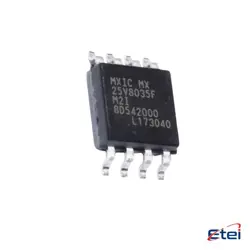
이미지는 참조용입니다.
MT7990
+BOM-
제조업체MAXIC 기술
-
제조업체 부품 #MT7990
-
데이터시트 MT7990 DataSheet
-
재고13841
365 1일 품질 보증
7*24 영업 시간 서비스 보증
90-판매 후 1일 보증
정품 보증
사양
| 속성 | 가치 |
| Manufacturer | MAXIC Tech |
| Package / Case | SOP-8 |
| Number of Channels | 1 |
| Operating Temperature | -40℃~+105℃ |
| Topology | Flyback |
개요
Description
The MT7990 is a high-performance, multi-core processor designed for advanced computing tasks, including AI, machine learning, and high-throughput data processing. Built on an efficient architecture, it balances power consumption and performance, making it suitable for edge computing, servers, and embedded systems.
Key features include:
- Multi-core design: Enables parallel processing for faster task execution.
- AI acceleration: Optimized for neural network operations.
- Energy efficiency: Low power draw without compromising speed.
- Scalability: Supports integration in diverse hardware setups.
Applications span autonomous systems, cloud computing, and IoT devices. Its versatility and robust performance make it a competitive choice for modern computational demands.
Equivalent
- Qualcomm: IPQ8072A, IPQ8074A (Networking Pro Series)
- Broadcom: BCM4916, BCM6755 (for routers)
- Intel: WAV600 series (for Wi-Fi 6E)
These chips offer similar Wi-Fi 6/6E capabilities for routers, gateways, and networking devices.
Features
- Dual-core Arm Cortex-M33 (up to 300 MHz) for efficient processing.
- AI acceleration with a Neural Processing Unit (NPU) for edge AI tasks.
- Low power consumption with multiple sleep modes, ideal for battery-powered devices.
- Rich connectivity: Wi-Fi 6, Bluetooth 5.2, and optional sub-GHz RF for IoT networks.
- Security: Arm TrustZone, secure boot, and hardware encryption (AES, SHA, ECC).
- Memory: Up to 4MB flash and 512KB RAM for flexible storage.
- Peripherals: Supports USB, SPI, I2C, UART, PWM, ADC, and more.
Ideal for smart home, wearables, industrial automation, and AIoT applications.
Pinout
1. Power Regulation – Multiple DC-DC converters and LDOs for core, memory, and peripheral voltages.
2. Battery Management – Charging control and fuel gauge support.
3. Interface Control – I²C/SPI for communication with the host processor.
4. System Control – Reset generation, power sequencing, and sleep mode management.
Exact pin functions depend on the specific implementation, but common pins include power inputs (VIN), outputs (VOUT), ground (GND), and control signals (EN, SCL/SDA). For precise details, refer to the datasheet or manufacturer documentation.