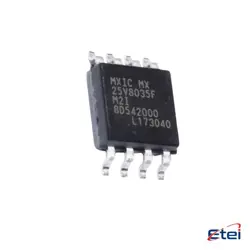
이미지는 참조용입니다.
PMBT3904,215
+BOMNEXPERIA PMBT3904 - SMALL SIGNAL
-
제조업체은지포 반도체
-
제조업체 부품 #PMBT3904,215
-
데이터시트 PMBT3904,215 DataSheet
-
패키지 SOT-23-3
-
재고3000
365 1일 품질 보증
7*24 영업 시간 서비스 보증
90-판매 후 1일 보증
정품 보증
사양
| 속성 | 가치 |
| Package / Case | Bulk |
| Series | Automotive, AEC-Q101 |
| Part Status | Active |
| Transistor Type | NPN |
| Current - Collector(Ic)(Max) | 200 mA |
| Voltage - Collector Emitter Breakdown(Max) | 40 V |
| Vce Saturation(Max) @ Ib Ic | 300mV @ 5mA, 50mA |
| Current - Collector Cutoff(Max) | 50nA (ICBO) |
| DC Current Gain(h FE)(Min) @ Ic Vce | 100 @ 10mA, 1V |
| Power - Max | 250 mW |
| Frequency - Transition | 300MHz |
| Operating Temperature | 150°C (TJ) |
| Mounting Type | Surface Mount |
개요
Description
1. Course Code Breakdown:
- PMBT could stand for a specific department or subject area. For example, PMBT might mean Project Management, Biotechnology, or another field depending on the institution.
- The numbers "3904, 215" could indicate course sequencing or level, often used to specify whether it's an undergraduate or graduate course.
2. Course Objectives:
- An introductory course usually aims to provide foundational knowledge and skills pertinent to the subject area.
- It may cover basic concepts, methodologies, and applications relevant to the field.
3. Structure:
- Typically includes lectures, discussions, assignments, and exams to assess understanding.
- May involve practical or lab components if applicable.
4. Target Audience:
- Designed for students beginning their exploration of the subject, possibly with prerequisites outlining required prior knowledge.
For precise details, you would need to consult the course syllabus or the offering institution.
Equivalent
1. 2N3904
2. MMBT3904
3. BC547
4. BC337
5. KSC1845
These transistors share similar electrical characteristics and can be used in similar applications. However, always check the datasheets for specific parameters to ensure compatibility with your circuit.
Features
1. Package Type: Typically available in a surface-mount SOT-23 package.
2. Maximum Ratings:
- Collector-Emitter Voltage (V_CE): Usually around 40V.
- Collector-Base Voltage (V_CB): Typically 60V.
- Emitter-Base Voltage (V_EB): Generally around 6V.
- Collector Current (I_C): Often up to 200 mA.
3. Power Dissipation: Approximately 300 mW.
4. Transition Frequency: Often around 300 MHz, indicating its suitability for high-frequency applications.
5. DC Current Gain (h_FE): Typically ranging from 100 to 300, depending on the specific variant and conditions.
6. Operating Temperature Range: Generally from -55°C to +150°C.
These features make the PMBT3904 versatile for various electronic circuits, including signal amplification and switching tasks.
Pinout
1. Pin 1 (Base): This is the control pin for the transistor. A small current at the base controls a larger current flow between the collector and emitter.
2. Pin 2 (Emitter): This is the exit point for the current flowing through the transistor. It acts as the current sink in an NPN transistor.
3. Pin 3 (Collector): This is the input point for the current flowing through the transistor. It acts as the current source in an NPN transistor.
The PMBT3904 is used in various applications such as switching and amplification due to its ability to handle moderate current and voltage levels.
Manufacturer
Application
1. Switching Circuits: Used for turning on and off low-current devices.
2. Amplification: Employed in amplifiers to increase signal strength in audio and RF circuits.
3. Oscillator Circuits: Utilized in creating oscillators or timing circuits.
4. Signal Processing: Involved in processing digital and analog signals.
5. Driving Loads: Suitable for driving small loads like LEDs and relays.
Their versatility makes them suitable for both hobbyist and industrial electronic projects.