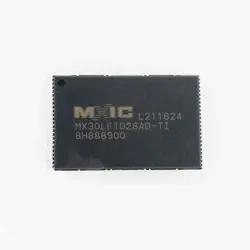
사양
| 속성 | 가치 |
| Package / Case | Tube |
| Part Status | Obsolete |
| Type | 555 Type, Timer/Oscillator (Single) |
| Voltage - Supply | 4.5V ~ 16V |
| Supply Current | 7.5 mA |
| Operating Temperature | -40°C ~ 85°C |
| Supplier Device Package | 8-SOIC |
개요
Description
The SA555D is a precision timing integrated circuit belonging to the 555 timer IC family, widely used in various electronic applications. This device is known for its reliability and versatility in generating precise time delays or oscillation. Housed in an SOIC-8 (Small Outline Integrated Circuit) package, the SA555D is suitable for surface-mount technology.
Key features of the SA555D include a wide voltage supply range (typically 4.5V to 16V), adjustable duty cycles, and low power consumption. It operates in three main modes: monostable, astable, and bistable. In monostable mode, the SA555D is used for single pulse generation. In astable mode, it generates continuous square waveforms for applications like clock generation. In bistable mode, it functions as a flip-flop.
The SA555D is favored in applications such as timers, pulse generation, LED flashers, and frequency dividers due to its straightforward design and ease of use. Its robust performance and flexibility make it a staple component in both hobbyist and professional electronics projects.
Key features of the SA555D include a wide voltage supply range (typically 4.5V to 16V), adjustable duty cycles, and low power consumption. It operates in three main modes: monostable, astable, and bistable. In monostable mode, the SA555D is used for single pulse generation. In astable mode, it generates continuous square waveforms for applications like clock generation. In bistable mode, it functions as a flip-flop.
The SA555D is favored in applications such as timers, pulse generation, LED flashers, and frequency dividers due to its straightforward design and ease of use. Its robust performance and flexibility make it a staple component in both hobbyist and professional electronics projects.
Equivalent
The SA555D is a precision timing circuit commonly used for timer, delay, pulse generation, and oscillator applications. Equivalent products include:
1. NE555
2. LM555
3. SE555
4. TLC555
5. MC1455
6. TS555
These equivalents may have slight variations in specifications or performance, but they are generally interchangeable in most applications that utilize a 555 timer IC. Always check specific datasheets to ensure compatibility with your requirements.
1. NE555
2. LM555
3. SE555
4. TLC555
5. MC1455
6. TS555
These equivalents may have slight variations in specifications or performance, but they are generally interchangeable in most applications that utilize a 555 timer IC. Always check specific datasheets to ensure compatibility with your requirements.
Features
The SA555D is a precision timer IC known for its versatility in timing and oscillator applications. Key features include:
1. Wide Supply Voltage Range: Operates from 4.5V to 16V, accommodating a variety of circuits.
2. Timing Precision: Provides accurate time delays from microseconds to hours by configuring external resistors and capacitors.
3. Output Compatibility: Capable of driving TTL loads with a maximum output current of 200mA.
4. Low Power Consumption: Typically draws less than 3mA when operating at 5V.
5. Astable and Monostable Operation: Can function as both a pulse generator and a timer.
6. Temperature Stability: Functions effectively over a wide temperature range, making it suitable for various environments.
7. Adjustable Duty Cycle: Allows modification of the ON/OFF time ratio in astable mode.
8. Internal Discharge Transistor: Facilitates capacitor discharge in timing applications, enhancing reliability.
These features make the SA555D ideal for applications requiring reliable timing, pulse generation, and waveform shaping.
1. Wide Supply Voltage Range: Operates from 4.5V to 16V, accommodating a variety of circuits.
2. Timing Precision: Provides accurate time delays from microseconds to hours by configuring external resistors and capacitors.
3. Output Compatibility: Capable of driving TTL loads with a maximum output current of 200mA.
4. Low Power Consumption: Typically draws less than 3mA when operating at 5V.
5. Astable and Monostable Operation: Can function as both a pulse generator and a timer.
6. Temperature Stability: Functions effectively over a wide temperature range, making it suitable for various environments.
7. Adjustable Duty Cycle: Allows modification of the ON/OFF time ratio in astable mode.
8. Internal Discharge Transistor: Facilitates capacitor discharge in timing applications, enhancing reliability.
These features make the SA555D ideal for applications requiring reliable timing, pulse generation, and waveform shaping.
Pinout
The SA555D is a variant of the popular 555 timer IC, which typically comes in an 8-pin Dual Inline Package (DIP) or a Small Outline Integrated Circuit (SOIC) package. Here is a brief description of each pin's function:
1. GND (Pin 1): Ground reference voltage, low level (0V).
2. Trigger (Pin 2): The input that triggers the timer to start, typically when it falls below 1/3 of the supply voltage.
3. Output (Pin 3): The output of the timer, which can be high or low based on the operation mode.
4. Reset (Pin 4): Resets the timer when connected to ground; it’s active low.
5. Control Voltage (Pin 5): Allows the modulation of the threshold and trigger levels, typically connected to a capacitor for noise filtering.
6. Threshold (Pin 6): Compares the voltage with a reference level; when it exceeds 2/3 of the supply voltage, the output is reset.
7. Discharge (Pin 7): Discharges the timing capacitor to ground when the output is low.
8. VCC (Pin 8): The supply voltage for the timer, typically between 4.5V to 15V.
The SA555D can be used in various applications like timers, pulse generation, and oscillators.
1. GND (Pin 1): Ground reference voltage, low level (0V).
2. Trigger (Pin 2): The input that triggers the timer to start, typically when it falls below 1/3 of the supply voltage.
3. Output (Pin 3): The output of the timer, which can be high or low based on the operation mode.
4. Reset (Pin 4): Resets the timer when connected to ground; it’s active low.
5. Control Voltage (Pin 5): Allows the modulation of the threshold and trigger levels, typically connected to a capacitor for noise filtering.
6. Threshold (Pin 6): Compares the voltage with a reference level; when it exceeds 2/3 of the supply voltage, the output is reset.
7. Discharge (Pin 7): Discharges the timing capacitor to ground when the output is low.
8. VCC (Pin 8): The supply voltage for the timer, typically between 4.5V to 15V.
The SA555D can be used in various applications like timers, pulse generation, and oscillators.
Manufacturer
The SA555D is manufactured by NXP Semiconductors. NXP is a global semiconductor company that designs and manufactures a wide range of electronic components and solutions. It is headquartered in Eindhoven, Netherlands, and is known for its innovations in the automotive, industrial, mobile, and communication infrastructure markets. The company produces products that include microcontrollers, processors, sensors, and connectivity solutions, focusing on enabling secure connections and infrastructure for a smarter world.
Application
The SA555D is a versatile timer IC used in various applications. It is commonly employed in timing delays, pulse generation, and oscillator circuits. This IC is used in applications such as LED flashers, frequency dividers, and PWM (Pulse Width Modulation) controllers. Additionally, it is utilized in tone generators, function generators, and analog-to-digital converters. The SA555D can also be found in automotive electronics for functions like delay timers and in consumer electronics for generating clock pulses. Its flexibility and reliability make it a popular choice in both educational electronics projects and professional circuit designs.
Package
The SA555D is a precision timer IC available in an 8-pin SOIC (Small Outline Integrated Circuit) package. This surface-mount package type is commonly used for compact and efficient circuit designs.