사양
| 속성 | 가치 |
| Package / Case | Tube |
| Part Status | Obsolete |
| Function | Compandor |
| Applications | Consumer Audio, Telecommunication Systems |
| Number of Channels | 2 |
| Interface | Analog |
| Voltage - Supply | 6V ~ 18V |
| Operating Temperature | -40°C ~ 85°C (TA) |
| Specifications | 110dB |
| Mounting Type | Through Hole |
개요
Description
The SA571N is a versatile operational amplifier (op-amp) and compressor/expander IC from ON Semiconductor (formerly Philips). It is designed for audio signal processing, offering low noise, high gain, and wide bandwidth.
Key features:
- Dual op-amp with independent channels.
- Dynamic range compression/expansion for audio applications.
- Low distortion and high slew rate for clean signal processing.
- Wide supply voltage range (typically ±4V to ±18V).
Common uses include:
- Audio compressors/limiters in recording equipment.
- Noise reduction systems (e.g., Dolby-like circuits).
- General-purpose signal conditioning.
The SA571N is favored for its flexibility in analog audio circuits, though newer ICs may offer improved specs. For detailed performance metrics, consult the datasheet.
Key features:
- Dual op-amp with independent channels.
- Dynamic range compression/expansion for audio applications.
- Low distortion and high slew rate for clean signal processing.
- Wide supply voltage range (typically ±4V to ±18V).
Common uses include:
- Audio compressors/limiters in recording equipment.
- Noise reduction systems (e.g., Dolby-like circuits).
- General-purpose signal conditioning.
The SA571N is favored for its flexibility in analog audio circuits, though newer ICs may offer improved specs. For detailed performance metrics, consult the datasheet.
Equivalent
The SA571N (compandor IC) has several equivalents, including:
- NE571N (Signetics/Philips)
- LM571N (National Semiconductor)
- NJM571D (New Japan Radio)
- XR-571CN (Exar)
These chips offer similar companding (compression/expansion) functions for audio and telecom applications. Verify pin compatibility and specs before substitution.
- NE571N (Signetics/Philips)
- LM571N (National Semiconductor)
- NJM571D (New Japan Radio)
- XR-571CN (Exar)
These chips offer similar companding (compression/expansion) functions for audio and telecom applications. Verify pin compatibility and specs before substitution.
Pinout
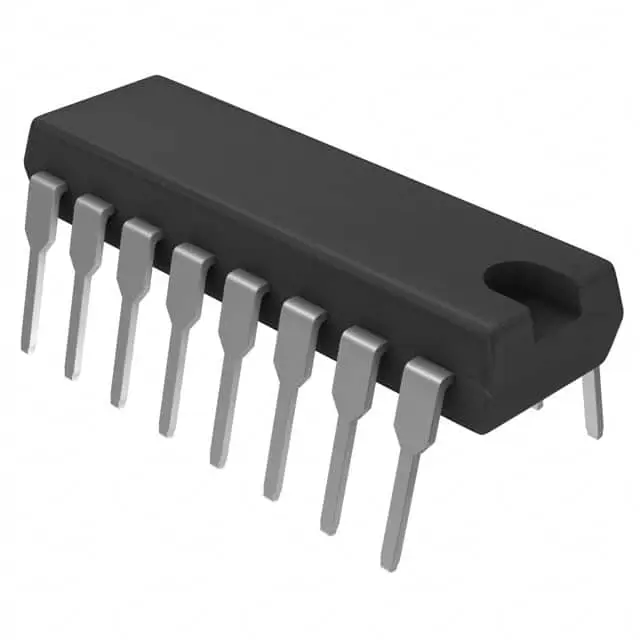
The SA571N is a 16-pin DIP (Dual In-line Package) IC primarily used as a compander (compressor/expander) for audio signal processing.
Key Functions:
- Compression: Reduces dynamic range for recording/transmission.
- Expansion: Restores dynamic range during playback.
- Low noise and distortion for high-quality audio.
Pin Highlights:
- Pins 1 & 16: Input/Output for compression/expansion.
- Pins 2 & 15: Control voltage for gain adjustment.
- Pins 4 & 13: Ground (GND).
- Pins 8 & 9: Power supply (typically ±15V).
Designed for professional audio systems, the SA571N ensures efficient dynamic range management.
Key Functions:
- Compression: Reduces dynamic range for recording/transmission.
- Expansion: Restores dynamic range during playback.
- Low noise and distortion for high-quality audio.
Pin Highlights:
- Pins 1 & 16: Input/Output for compression/expansion.
- Pins 2 & 15: Control voltage for gain adjustment.
- Pins 4 & 13: Ground (GND).
- Pins 8 & 9: Power supply (typically ±15V).
Designed for professional audio systems, the SA571N ensures efficient dynamic range management.
Application
The SA571N is a versatile operational amplifier (op-amp) with applications in:
1. Audio Processing – Used in compressors, limiters, and noise reduction circuits.
2. Signal Conditioning – Enhances weak signals in instrumentation and control systems.
3. Dynamic Range Control – Employed in automatic gain control (AGC) circuits.
4. Communication Systems – Improves signal integrity in modems and transceivers.
5. Industrial Electronics – Supports precision amplification in sensors and measurement devices.
Its low noise and wide bandwidth make it suitable for high-performance analog circuits.
1. Audio Processing – Used in compressors, limiters, and noise reduction circuits.
2. Signal Conditioning – Enhances weak signals in instrumentation and control systems.
3. Dynamic Range Control – Employed in automatic gain control (AGC) circuits.
4. Communication Systems – Improves signal integrity in modems and transceivers.
5. Industrial Electronics – Supports precision amplification in sensors and measurement devices.
Its low noise and wide bandwidth make it suitable for high-performance analog circuits.