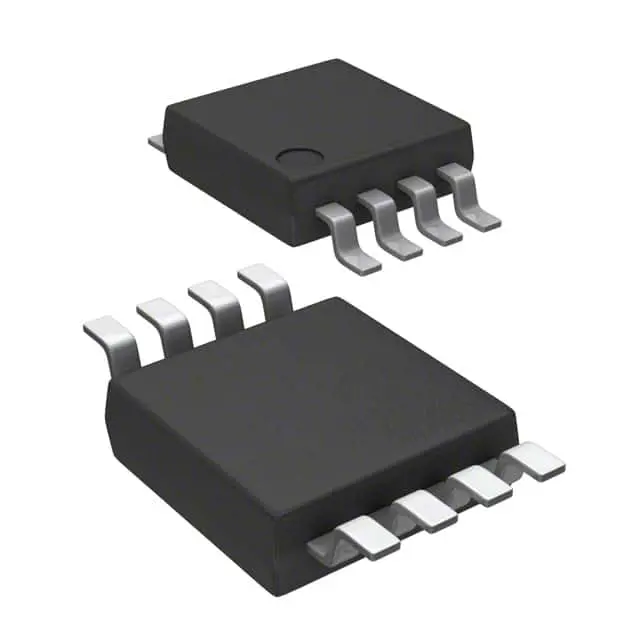
이미지는 참조용입니다.
SGM358YMS/TR
+BOM-
제조업체SG 미니 회사
-
제조업체 부품 #SGM358YMS/TR
-
데이터시트 SGM358YMS/TR DataSheet
-
재고25747
365 1일 품질 보증
7*24 영업 시간 서비스 보증
90-판매 후 1일 보증
정품 보증
사양
| 속성 | 가치 |
| EU Ro HS | Compliant |
| ECCN (US) | EAR99 |
| Part Status | Active |
| Automotive | Unknown |
| PPAP | Unknown |
| Mounting Type | Surface Mount |
| Package Height | 0.95(Max) |
| Package Width | 3.1(Max) |
| Package Length | 3.1(Max) |
| PCB changed | 8 |
| Package / Case | SO |
| Supplier Device Package | MSOP |
| Pin Count | 8 |
| Lead Shape | Gull-wing |
| Packaging | Tape and Reel |
| Type | General Purpose Amplifier |
| Manufacturer Type | General Purpose Amplifier |
| Number of Channels per Chip | 2 |
| Rail to Rail | Rail to Rail Input/Output |
| Process Technology | CMOS |
| Output Type | CMOS |
| Maximum Input Offset Voltage (m V) | 5@5V |
| Minimum Single Supply Voltage (V) | 2.1 |
| Maximum Single Supply Voltage (V) | 5.5 |
| Maximum Input Offset Current (u A) | 0.00001(Typ)@5V |
| Typical Input Bias Current (u A) | 0.00001@5V |
| Maximum Quiescent Current (m A) | 0.16@5V |
| Typical Output Current (m A) | 84@5V |
| Power Supply Type | Single |
| Typical Slew Rate (V / us) | 0.52@5V |
| Typical Input Noise Voltage Density (n V / rt Hz) | 27@5V |
| Typical Voltage Gain (d B) | 84 |
| Minimum PSRR (d B) | 60 |
| Minimum CMRR (d B) | 56 |
| Minimum CMRR Range (d B) | 50 to 60 |
| Typical Gain Bandwidth Product (M Hz) | 1 |
| Typical Settling Time (ns) | 5300 |
| Shut Down Support | No |
| Minimum Operating Temperature (°C) | -40 |
| Maximum Operating Temperature (°C) | 85 |
| Supplier Temperature Grade | Extended |
개요
Description
The SGM358YMS/TR is commonly used in audio processing, signal conditioning, and filtering applications due to its ability to amplify weak signals with precision. Its compact package design makes it ideal for space-constrained environments, while its robust build ensures reliability and longevity in various operating conditions. Additionally, the device's low offset voltage and high input impedance contribute to its accuracy and efficiency.
Overall, the SGM358YMS/TR is a reliable component for designers seeking efficient and effective solutions in analog signal processing tasks.
Equivalent
Features
1. Dual Op-Amp: It contains two operational amplifiers in a single package, providing efficient use of board space.
2. Low Power Consumption: Designed for low power operation, making it ideal for battery-powered devices.
3. Wide Supply Voltage Range: It can operate over a wide voltage range, enhancing its flexibility in different circuit designs.
4. Rail-to-Rail Output: Offers rail-to-rail output swing, which allows for maximum dynamic range utilization.
5. High Slew Rate: This feature enables the device to handle rapidly changing input signals effectively.
6. Low Noise: Ensures minimal signal distortion and high-quality signal amplification.
7. Surface-Mount Package: Available in a compact MSOP-8 package, suitable for modern, high-density PCB layouts.
These features make the SGM358YMS/TR suitable for use in signal amplification, filtering, and other analog signal processing applications.
Pinout
1. Pin 1 (OUT A): Output of the first operational amplifier.
2. Pin 2 (IN A–): Inverting input of the first operational amplifier.
3. Pin 3 (IN A+): Non-inverting input of the first operational amplifier.
4. Pin 4 (V–): Negative power supply (ground in a single-supply application).
5. Pin 5 (IN B+): Non-inverting input of the second operational amplifier.
6. Pin 6 (IN B–): Inverting input of the second operational amplifier.
7. Pin 7 (OUT B): Output of the second operational amplifier.
8. Pin 8 (V+): Positive power supply.
The SGM358YMS/TR is designed for general-purpose applications, offering low power consumption and good performance. It is often used in audio applications, sensor interfaces, and other analog signal processing tasks.
Manufacturer
Application
1. Signal Conditioning: Amplifying and filtering signals in sensor interfacing.
2. Active Filters: Used in designing different types of analog filters.
3. Data Acquisition Systems: Amplifying signals for analog-to-digital conversion.
4. Audio Processing: Used in audio preamplifiers and mixers.
5. Instrumentation: Precision signal processing in measurement devices.
6. Control Systems: Implementing PID controllers and other feedback systems.
7. Analog Computing: Performing mathematical operations like addition, subtraction, integration, and differentiation.
Its versatility in these areas is due to its low power consumption, high gain bandwidth, and rail-to-rail input and output capabilities.