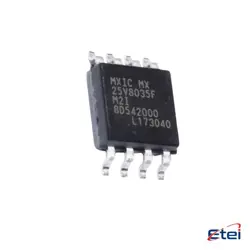
이미지는 참조용입니다.
SSD2828QN4R
+BOM-
제조업체정문과학기술
-
제조업체 부품 #SSD2828QN4R
-
데이터시트 SSD2828QN4R DataSheet
-
재고29892
365 1일 품질 보증
7*24 영업 시간 서비스 보증
90-판매 후 1일 보증
정품 보증
사양
| 속성 | 가치 |
| Manufacturer | Solomon Systech |
| Package | QFN-68-EP(8x8) |
개요
Equivalent
- TC358870XBG (Toshiba)
- LT8918B (Lontium)
- SN65DSI86 (TI)
- IT6151 (ITE Tech)
These chips also convert MIPI DSI to LVDS/HDMI, though pin compatibility may vary. Check datasheets for exact specs.
Features
- Interface Conversion: Converts MIPI DSI (1 or 2 lanes) to LVDS or parallel RGB (up to 24-bit).
- High Resolution: Supports displays up to 1920x1200@60Hz (LVDS) or 1280x800@60Hz (parallel RGB).
- Flexible Power Supply: Operates at 1.8V/3.3V for core and I/O.
- Embedded MCU: Includes an 8051 MCU for configuration and control.
- Low Power: Supports LP mode for reduced power consumption.
- Package: QFN-48 (7x7mm) for compact designs.
- Applications: Used in tablets, automotive displays, and embedded systems.
It simplifies interfacing MIPI-based processors with non-MIPI displays.
Pinout
- Pin Count: 48 pins (QFN package).
- Functions:
- Converts MIPI DSI to RGB (parallel) or LVDS output.
- Supports up to 1080p resolution.
- Configurable via I²C or SPI.
- Includes built-in PLL for clock generation.
- Supports multiple display interfaces (e.g., TTL, LVDS).
Common applications include driving LCD panels in embedded systems. For exact pinout, refer to the datasheet.
Manufacturer
The SSD2828QN4R is a MIPI DSI to LVDS bridge chip, commonly used in devices like smartphones, tablets, and embedded displays to convert signals between different display standards. Solomon Systech serves global markets, collaborating with display panel manufacturers and system integrators.
Application
1. Displays – Converts MIPI signals to LVDS for LCD panels in smartphones, tablets, and automotive displays.
2. Industrial HMI – Enables high-resolution touchscreens in control systems and medical devices.
3. Embedded Systems – Integrates with ARM-based processors for compact, power-efficient designs.
4. Augmented/Virtual Reality (AR/VR) – Supports high-speed data transmission for low-latency visuals.
Its low power consumption and compact form factor make it ideal for portable and space-constrained applications.