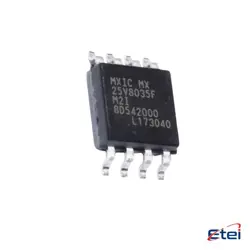
이미지는 참조용입니다.
STM32F205RGT7
+BOMIC MCU 32BIT 1MB FLASH 64LQFP
-
제조업체ST마이크로일렉트로닉스(주)
-
제조업체 부품 #STM32F205RGT7
-
데이터시트 STM32F205RGT7 DataSheet
-
패키지 QFP64
-
재고2601
365 1일 품질 보증
7*24 영업 시간 서비스 보증
90-판매 후 1일 보증
정품 보증
사양
| 속성 | 가치 |
| Package | Tray |
| Series | STM32F2 |
| ProductStatus | Active |
| CoreProcessor | ARM® Cortex®-M3 |
| CoreSize | 32-Bit Single-Core |
| Speed | 120MHz |
| Connectivity | CANbus, I²C, IrDA, LINbus, MMC, SPI, UART/USART, USB OTG |
| Peripherals | Brown-out Detect/Reset, DMA, I²S, LCD, POR, PWM, WDT |
| NumberofI/O | 51 |
| ProgramMemorySize | 1MB (1M x 8) |
| ProgramMemoryType | FLASH |
| RAMSize | 132K x 8 |
| Voltage-Supply(Vcc/Vdd) | 1.8V ~ 3.6V |
| DataConverters | A/D 16x12b; D/A 2x12b |
| OscillatorType | Internal |
| OperatingTemperature | -40°C ~ 105°C (TA) |
| MountingType | Surface Mount |
| Package/Case | 64-LQFP |
개요
Description
- Core: ARM Cortex-M3, operating up to 120 MHz.
- Memory: 1 MB Flash memory and 128 KB SRAM, providing ample space for complex applications and data storage.
- Peripherals: Rich set of peripherals, including USB 2.0 OTG, Ethernet, USART, SPI, I2C, and CAN interfaces, making it suitable for connectivity-intensive applications.
- Timers: Advanced timers for PWM, general-purpose timers, and watchdog timers.
- Analog Features: 12-bit ADCs and DACs for precision analog input and output tasks.
- Power Management: Multiple low-power modes and a built-in RTC for power-sensitive applications.
The STM32F205RGT7 is ideal for a variety of applications, including industrial automation, consumer electronics, and communication systems, providing reliable performance and extensive interfacing capabilities.
Equivalent
1. STM32F207 series: Similar features with additional options.
2. STM32F103 series: Slightly older Cortex-M3 models with fewer features.
3. NXP LPC1768: Cortex-M3 microcontroller with comparable specs.
4. TI TM4C123GH6PM: ARM Cortex-M4, a close match with broader support.
5. Microchip ATSAM3X8E: ARM Cortex-M3 featuring similar capabilities.
Always verify specific requirements like peripherals, memory, and performance for compatibility.
Features
Key features include:
1. Performance: ARM Cortex-M3 core, 120 MHz, with a memory protection unit.
2. Memory: 1 MB Flash, 128 KB SRAM.
3. Connectivity: Includes USB OTG, CAN, USART, SPI, I2C, and Ethernet.
4. Timers: Multiple advanced timers, general-purpose timers, and basic timers.
5. ADC/DAC: 3x 12-bit ADCs, 2x 12-bit DACs.
6. GPIOs: 82 general-purpose I/Os.
7. Crypto/Hash: Hardware acceleration for cryptographic algorithms.
8. Operating Voltage: 1.8V to 3.6V.
9. Power: Low-power modes for energy efficiency.
10. Packages: Available in LQFP-64 package.
This microcontroller is ideal for applications requiring high processing power, extensive connectivity, and enhanced security functions.
Pinout
Key features and functions include:
- Core: ARM Cortex-M3 32-bit RISC core, operating at up to 120 MHz.
- Memory: 1 MB of Flash memory and 128 KB of SRAM.
- Communication Interfaces: Multiple USARTs, I2C, SPI, and USB 2.0 full-speed interfaces.
- Timers: A variety of timers including general-purpose, basic, and advanced timers.
- Analog: 3x 12-bit ADCs and 2x DACs for analog input/output.
- GPIO: A number of general-purpose input/output pins for interfacing with external devices.
- Additional Features: RTC, CRC calculation unit, and a range of power-saving modes.
These features make it suitable for a wide array of applications, from consumer electronics to industrial automation.
Manufacturer
Application
1. Industrial Automation: Used in control systems and robotics for efficient processing and communication.
2. Consumer Electronics: Powers devices like smart appliances and wearable technology.
3. Healthcare Devices: Supports medical equipment for patient monitoring and diagnostics.
4. Automotive Systems: Assists in infotainment systems and vehicle control units.
5. IoT Devices: Facilitates connectivity and data processing in smart home devices and sensors.
6. Communication Equipment: Enhances networking devices and communication infrastructure.
These applications leverage the MCU's processing power, connectivity options, and robust architecture.